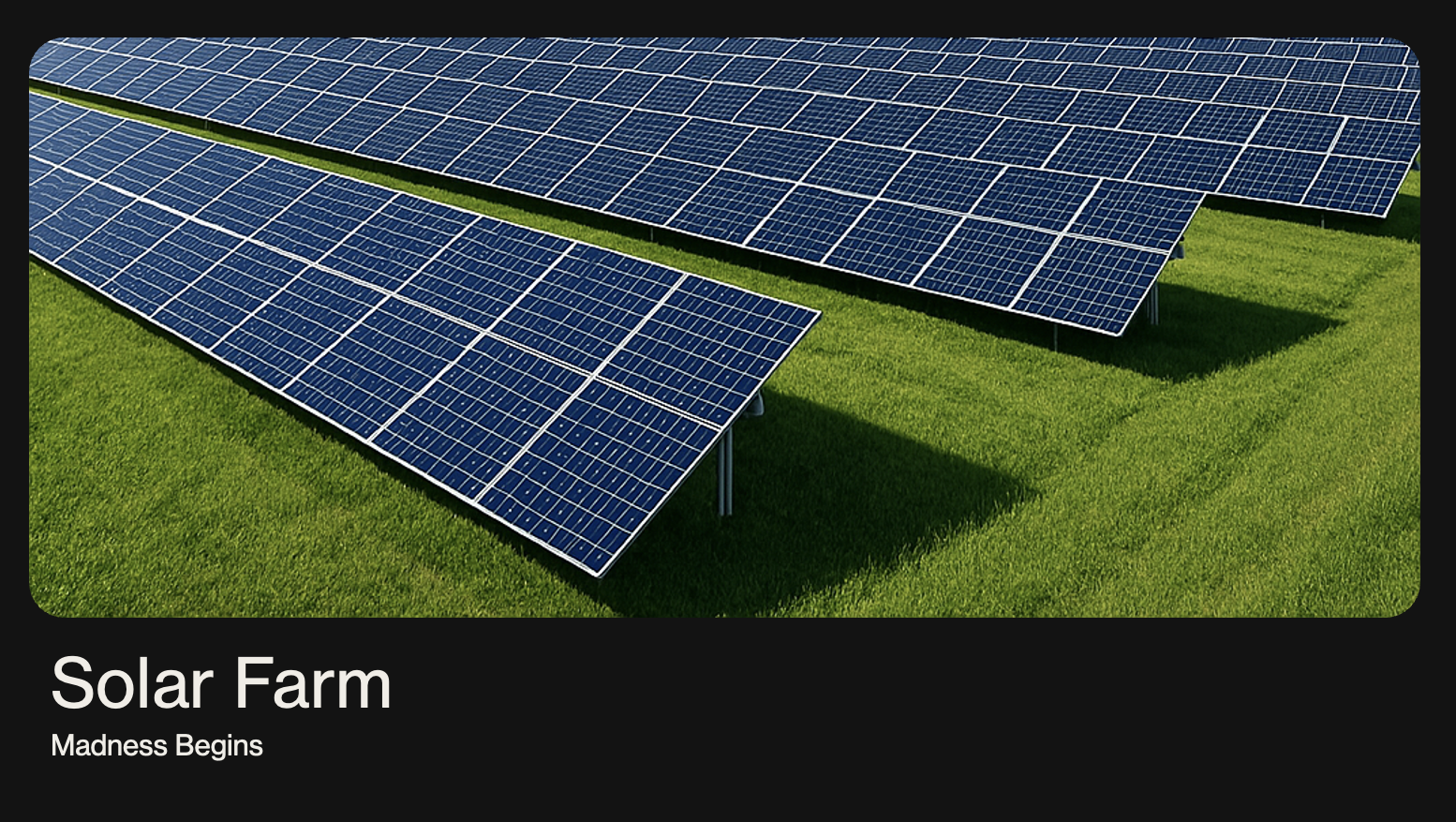
Mr Miliband has authorised the construction of Springwell Solar Farm in Lincolnshire, which is 10 times larger than Hyde Park.
Argument Against Springwell Solar Farm – Loss of High‑Quality Agricultural Land
Argument Against Springwell Solar Farm – Loss of High‑Quality Agricultural Land
1. Loss of High‑Quality Agricultural Land at a Time of Rising Food Insecurity
Many people argue that converting large areas of productive farmland into solar infrastructure directly undermines the UK’s ability to produce its own food.
Reports from the National Farmers’ Union and the Environment, Food & Rural Affairs Committee highlight that:
- The UK already imports around 45% of its food.
- Climate change, global conflict, and supply‑chain instability are increasing the risk of shortages.
- The UK has been losing agricultural land to development at a rate that some analysts describe as “unsustainable”.
Removing hundreds of acres of viable farmland for a solar installation is seen by many as a step in the wrong direction when the country needs more domestic production, not less.
2. Productive Farmland Is a Finite Resource
Unlike brownfield sites, industrial rooftops, or degraded land, high‑grade farmland cannot be replaced once it is taken out of use.
People raising concerns often point out that:
- Grade 1–3a land is classed as Best and Most Versatile (BMV).
- BMV land represents only a small proportion of the UK’s total land area.
- Once covered with panels, cabling, access tracks and substations, the land is effectively removed from meaningful agricultural use for 30–40 years.
This long‑term loss is viewed as a significant and irreversible impact.
3. Impact on Local Food Production and Rural Economy
Local communities often rely on agricultural land for:
- Crop production
- Livestock grazing
- Local supply chains
- Rural employment
Replacing farmland with a solar array can reduce:
- Local food output
- Farm income
- Agricultural jobs
- The resilience of local supply networks
Many residents argue that this weakens the rural economy and shifts the area away from its long‑established agricultural character.
4. Alternative Solar Locations Are Available
A common argument is that solar generation does not need to be placed on productive farmland.
Alternatives frequently suggested include:
- Commercial and industrial rooftops
- Car parks
- Brownfield land
- Contaminated or low‑grade land
- Warehouses and logistics centres
- Roadside verges and transport corridors
Government and industry reports note that the UK has vast untapped rooftop capacity, which could generate significant renewable energy without sacrificing farmland.
5. Food Security Is a National Strategic Priority
The UK Government’s own Food Strategy and EFRA Committee reports emphasise:
- The need to protect domestic food production
- The importance of maintaining a stable supply of home‑grown produce
- The risks of relying too heavily on imports
Many objectors argue that large‑scale solar farms on productive land conflict with these national priorities.
6. Long‑Term Environmental Balance
While renewable energy is essential, many people believe it should not come at the cost of:
- Reduced food production
- Loss of soil quality
- Disruption of agricultural ecosystems
- Removal
7. Solar Panel Supply Chain Concerns (Sourcing & Ethics)
Many residents are concerned that large‑scale solar farms rely heavily on imported panels, often from regions with questionable environmental and labour standards.
Industry data shows:
- Around 80–90% of the world’s solar panels are manufactured in China, particularly in Xinjiang and other provinces where:
- Energy for manufacturing is still largely coal‑powered, meaning the carbon footprint of production is high.
- There have been international concerns about forced labour in parts of the polysilicon supply chain.
- Very few panels used in UK solar farms are manufactured in Europe or the UK.
This raises legitimate questions about whether a project marketed as “green” is simply offshoring environmental damage and ethical issues to other countries while removing productive farmland here at home.
Residents often argue that if the UK is going to sacrifice agricultural land, the developer should at least demonstrate:
- Transparent supply chains
- Ethical sourcing
- Low‑carbon manufacturing
- Independent verification of panel origin
To date, many large solar farm proposals provide no such guarantees.
8. End‑of‑Life Waste and Recycling Issues
Solar panels have a typical lifespan of 25–35 years, meaning the Springwell site will eventually generate thousands of tonnes of waste.
Key concerns include:
Limited UK recycling capacity
- The UK currently has very limited facilities capable of recycling solar panels at scale.
- Most end‑of‑life panels are either:
- Shredded and down‑cycled (glass and aluminium recovered, but not the valuable materials), or
- Exported abroad for processing.
Hazardous materials
Panels contain:
- Lead
- Cadmium
- Silver
- Polysilicon
- Plastics and resins that are difficult to separate
If not properly handled, these materials can leach into soil and water.
Future waste burden
By the time Springwell reaches end‑of‑life, the UK could be facing a solar waste surge.
Studies predict that by 2050, the UK will have hundreds of thousands of tonnes of solar panel waste requiring specialist treatment.
Residents often argue that:
- The developer should provide a fully costed, guaranteed decommissioning and recycling plan, not vague assurances.
- The long‑term waste burden should not fall on the local community or taxpayers.
- Removing productive farmland for infrastructure that becomes hazardous waste in 30 years is not a sustainable trade‑off.