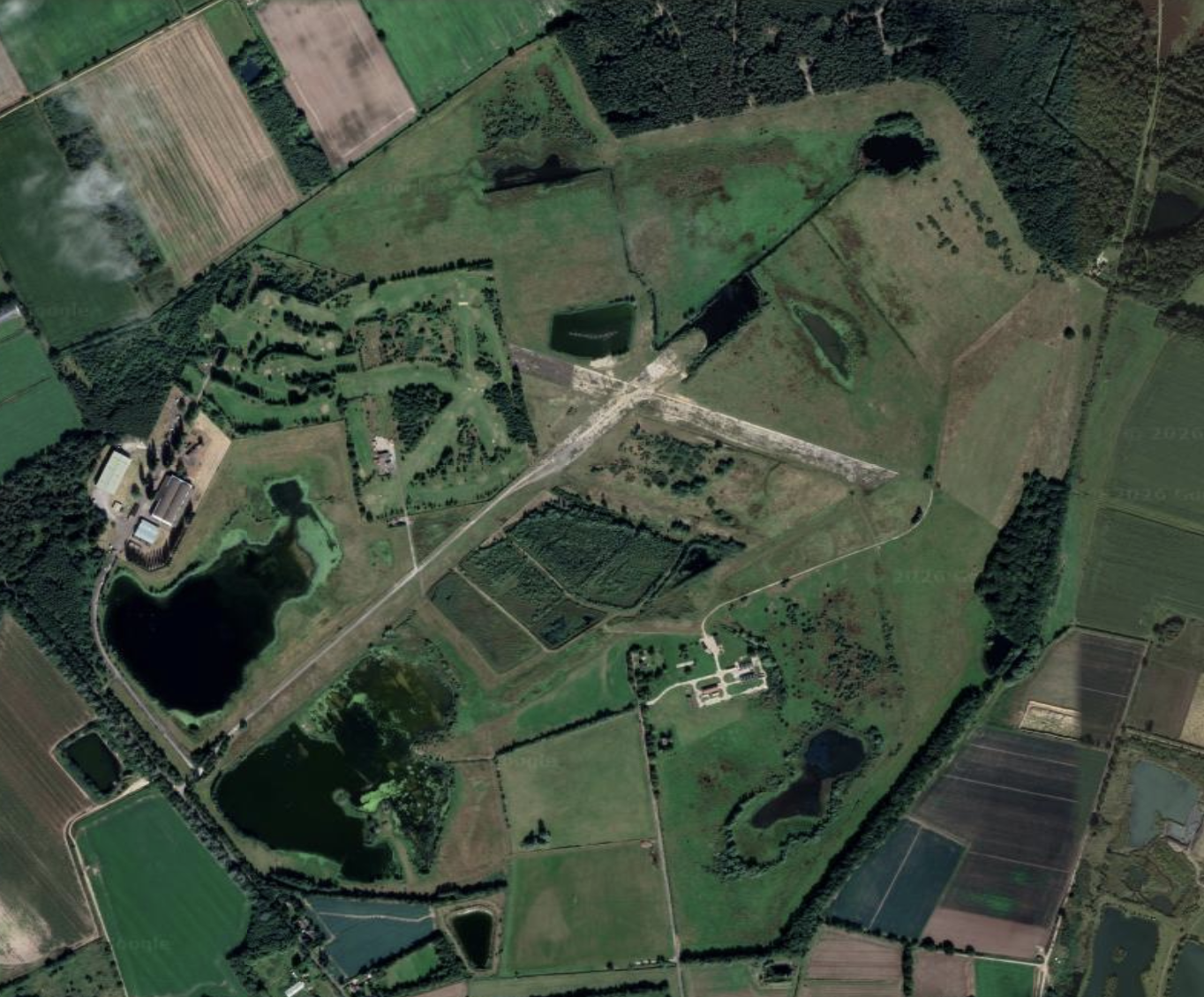
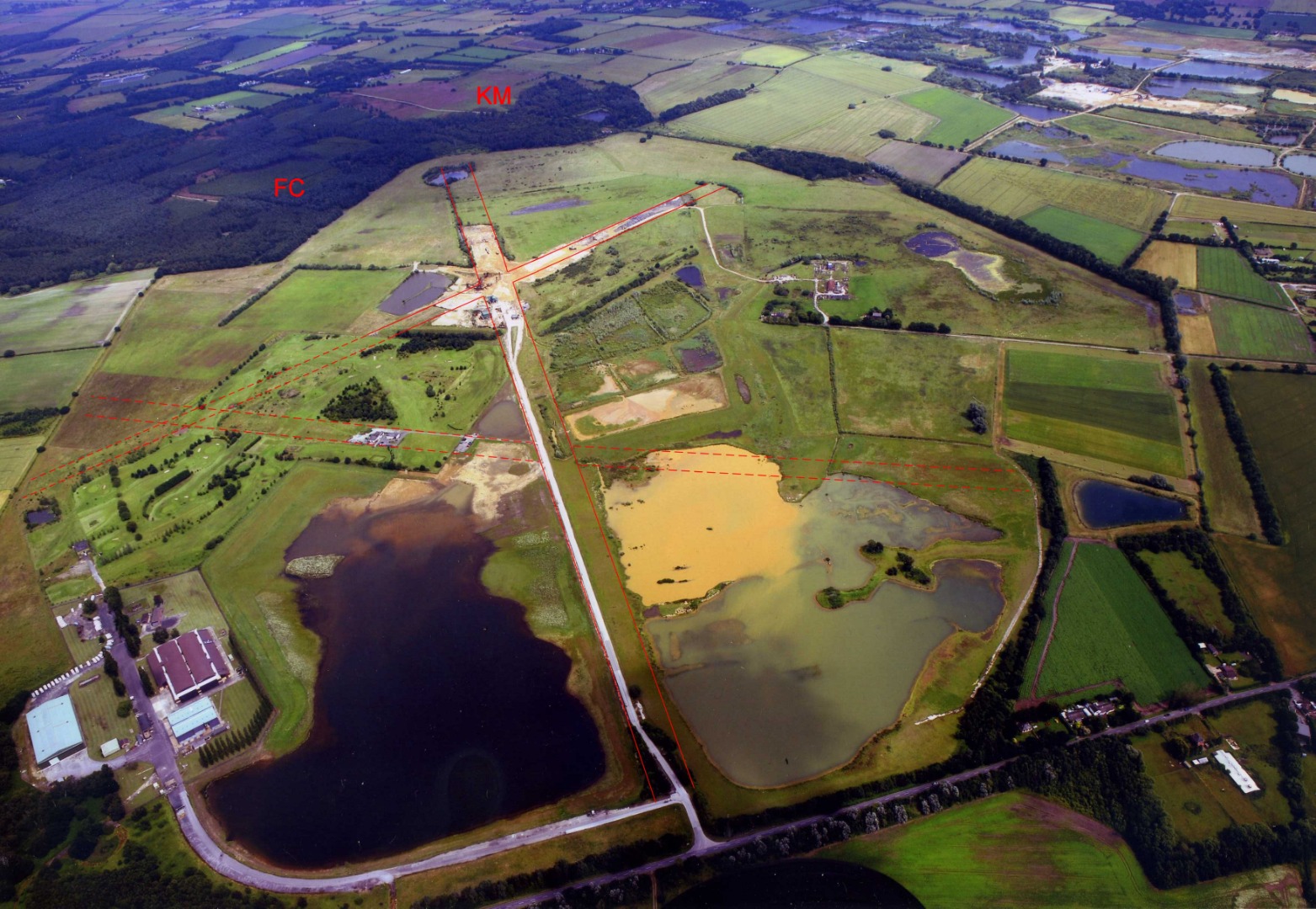
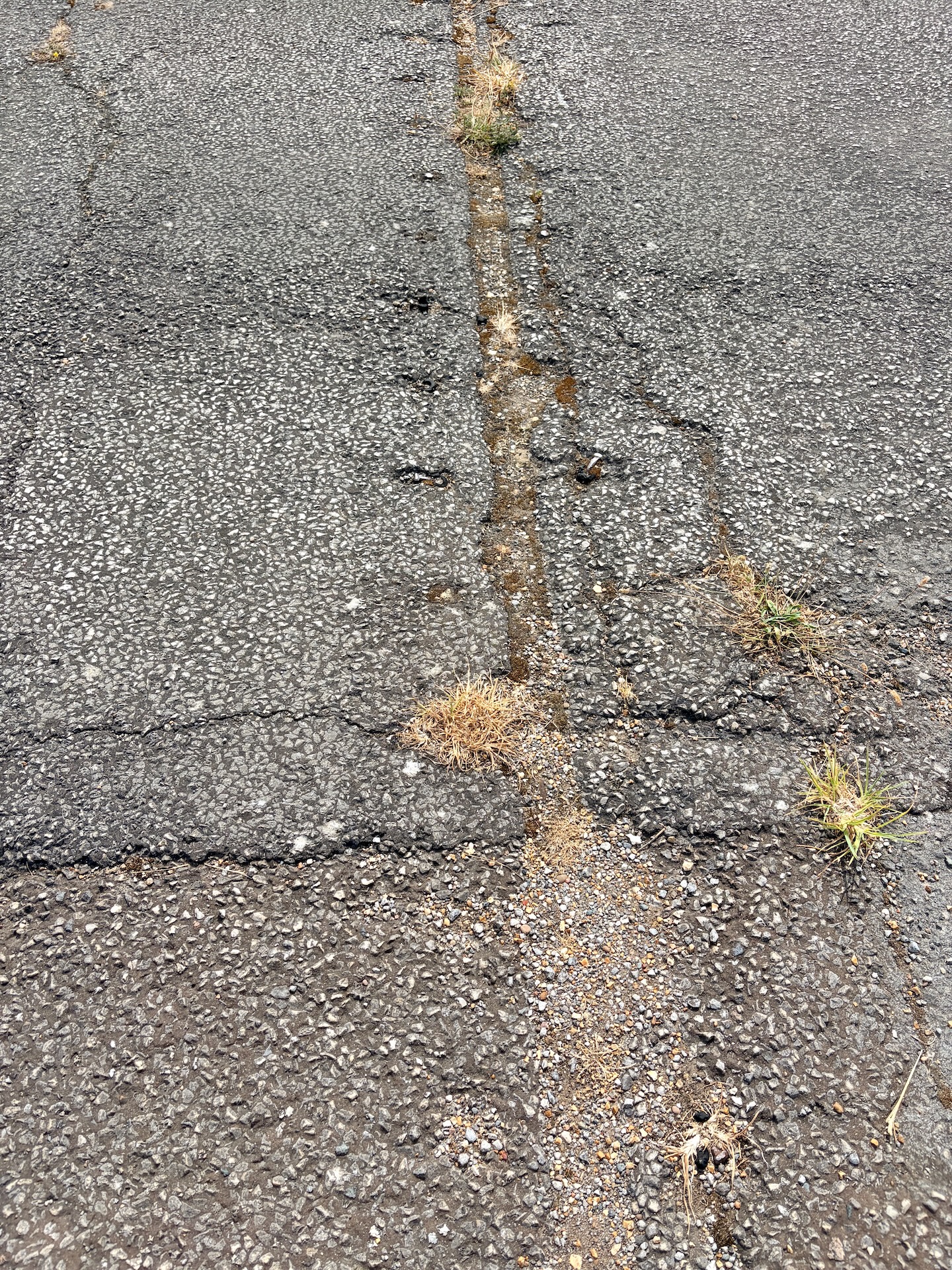
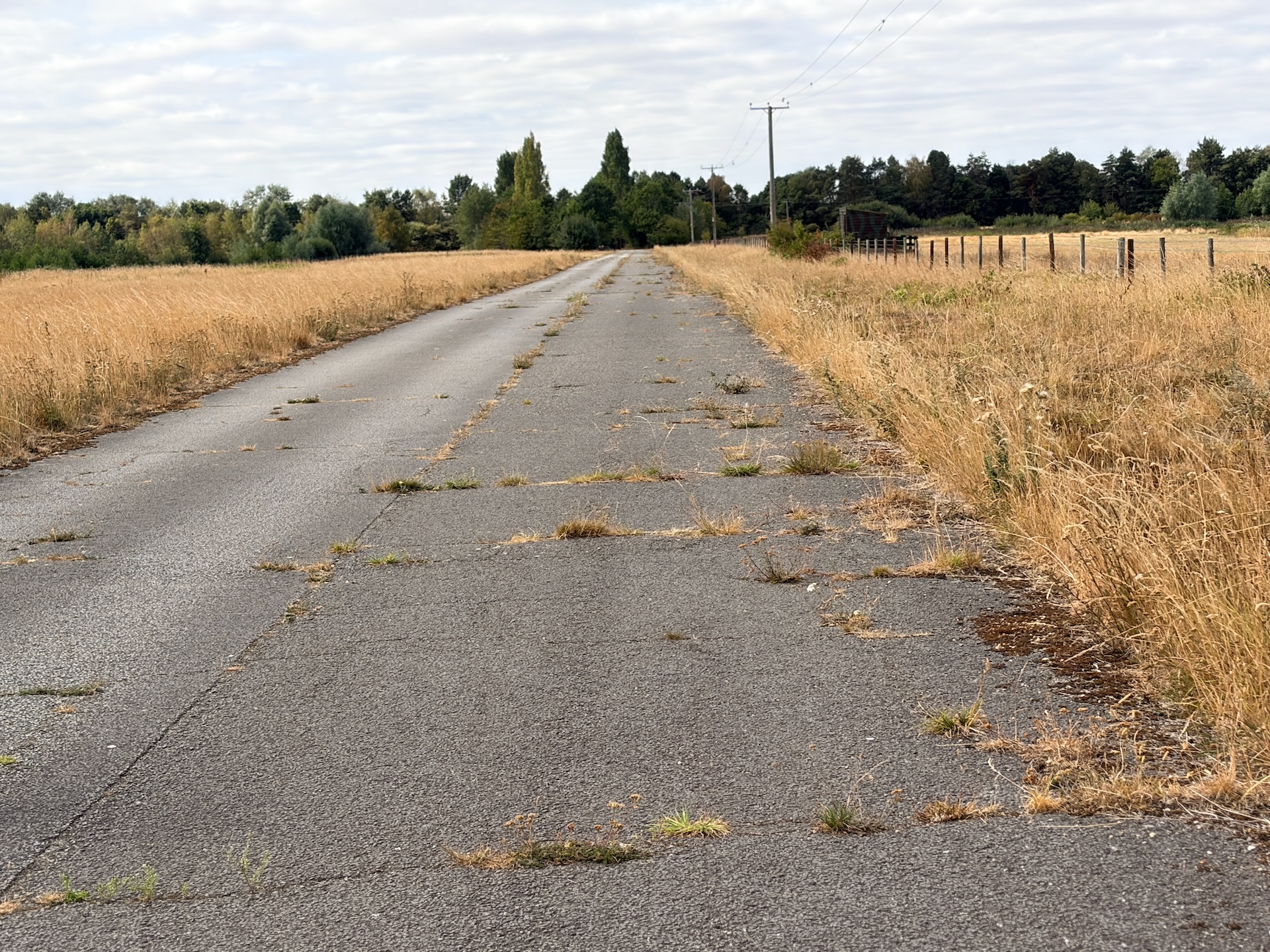
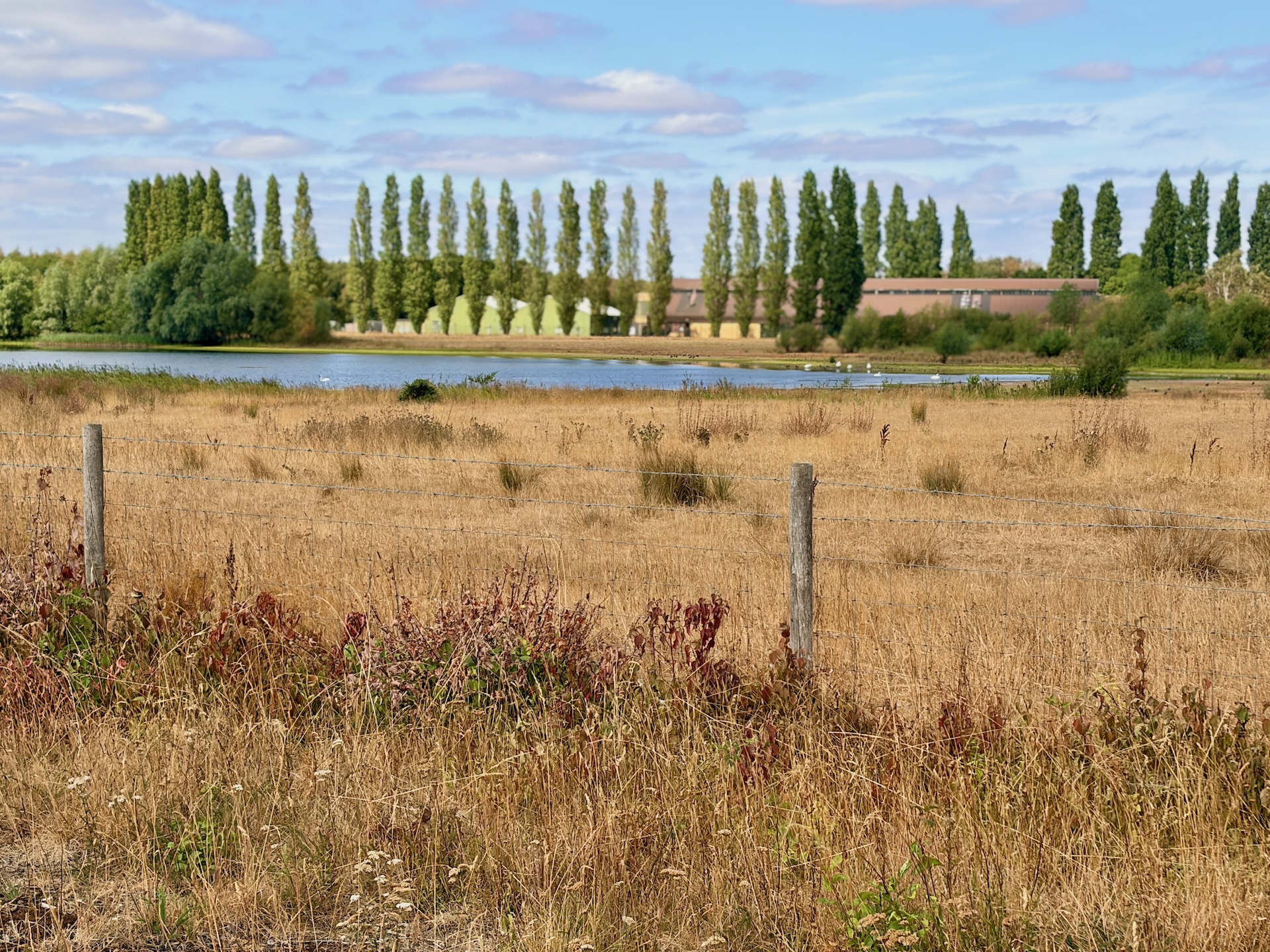
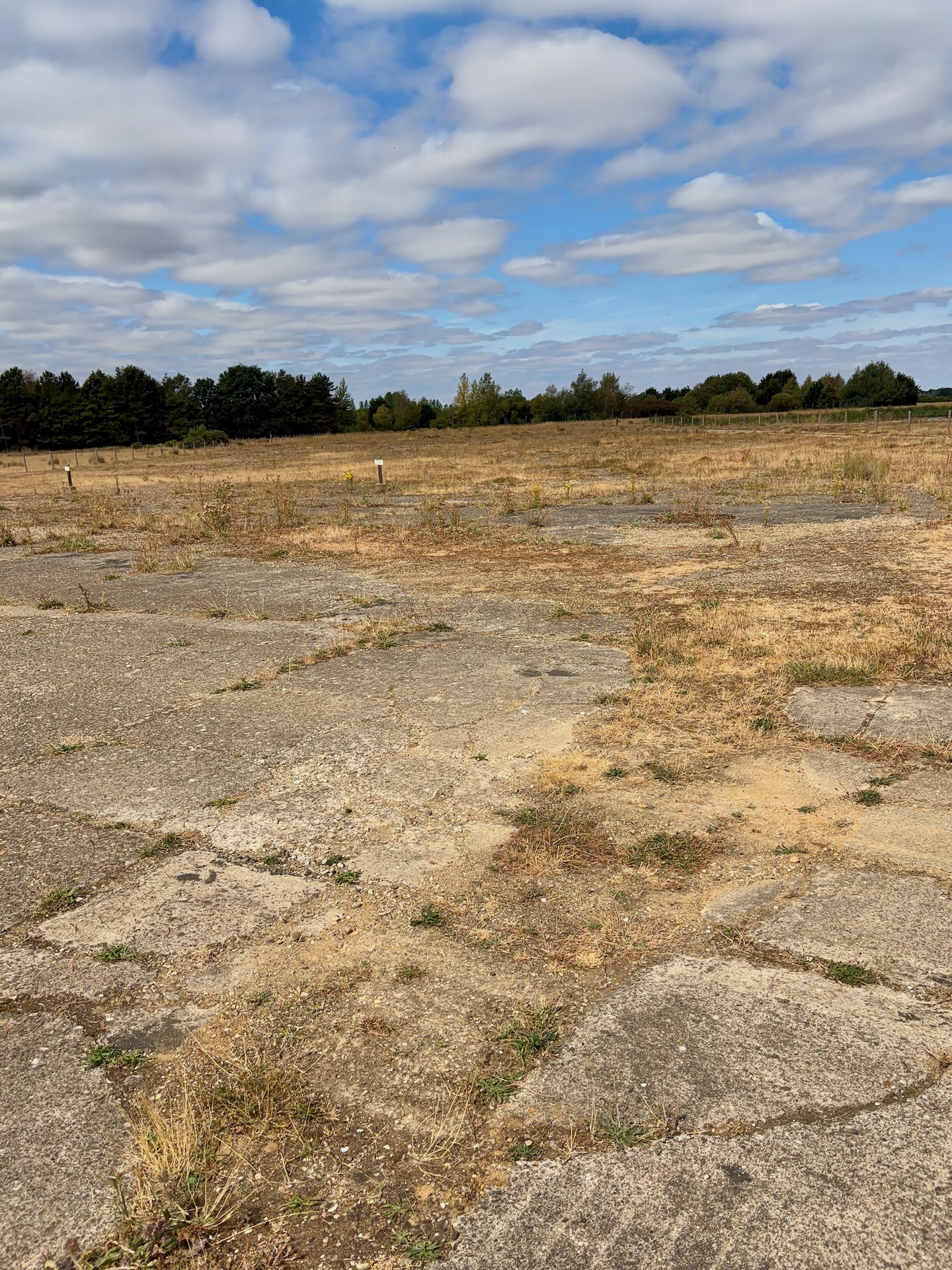
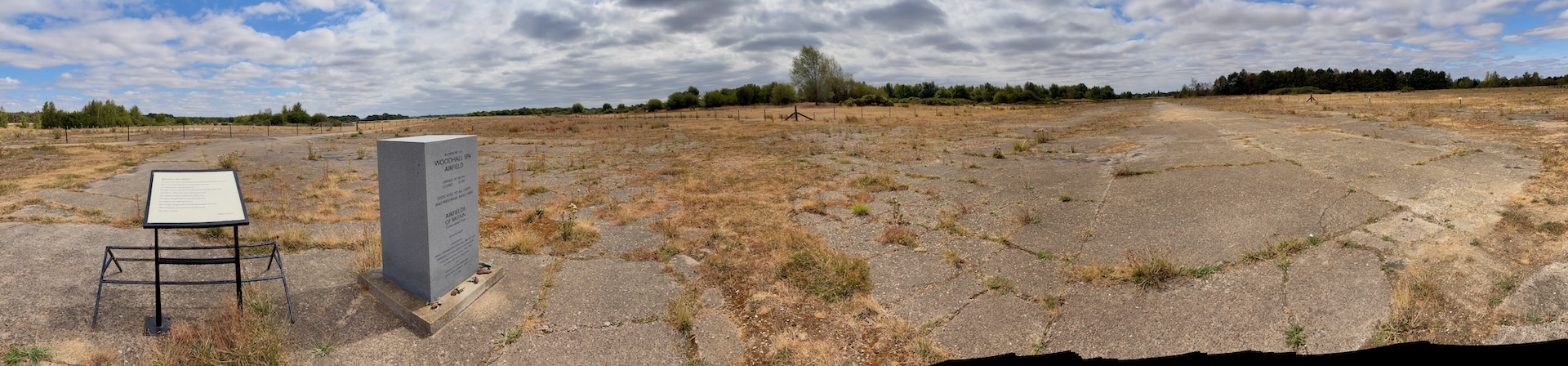
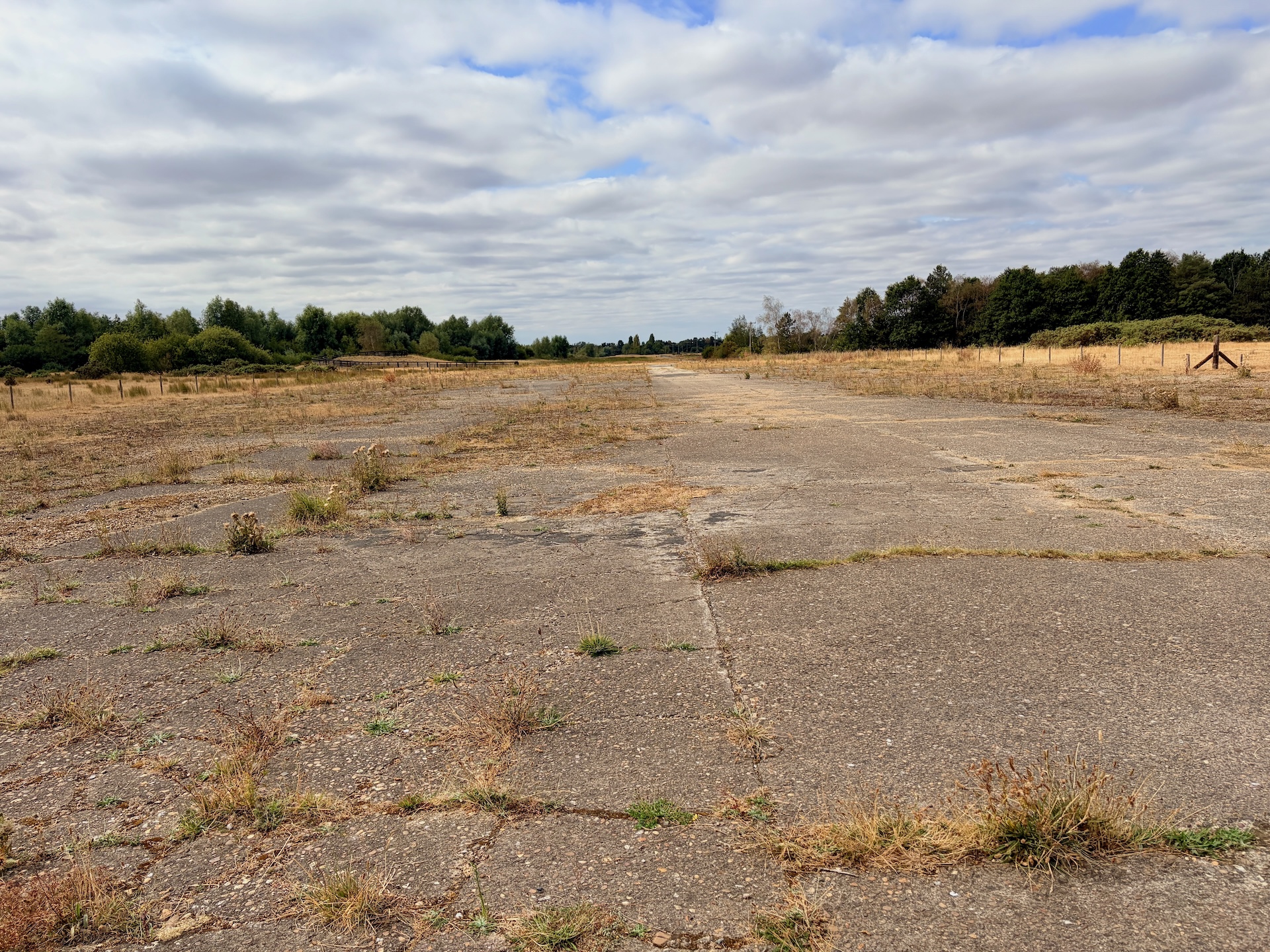
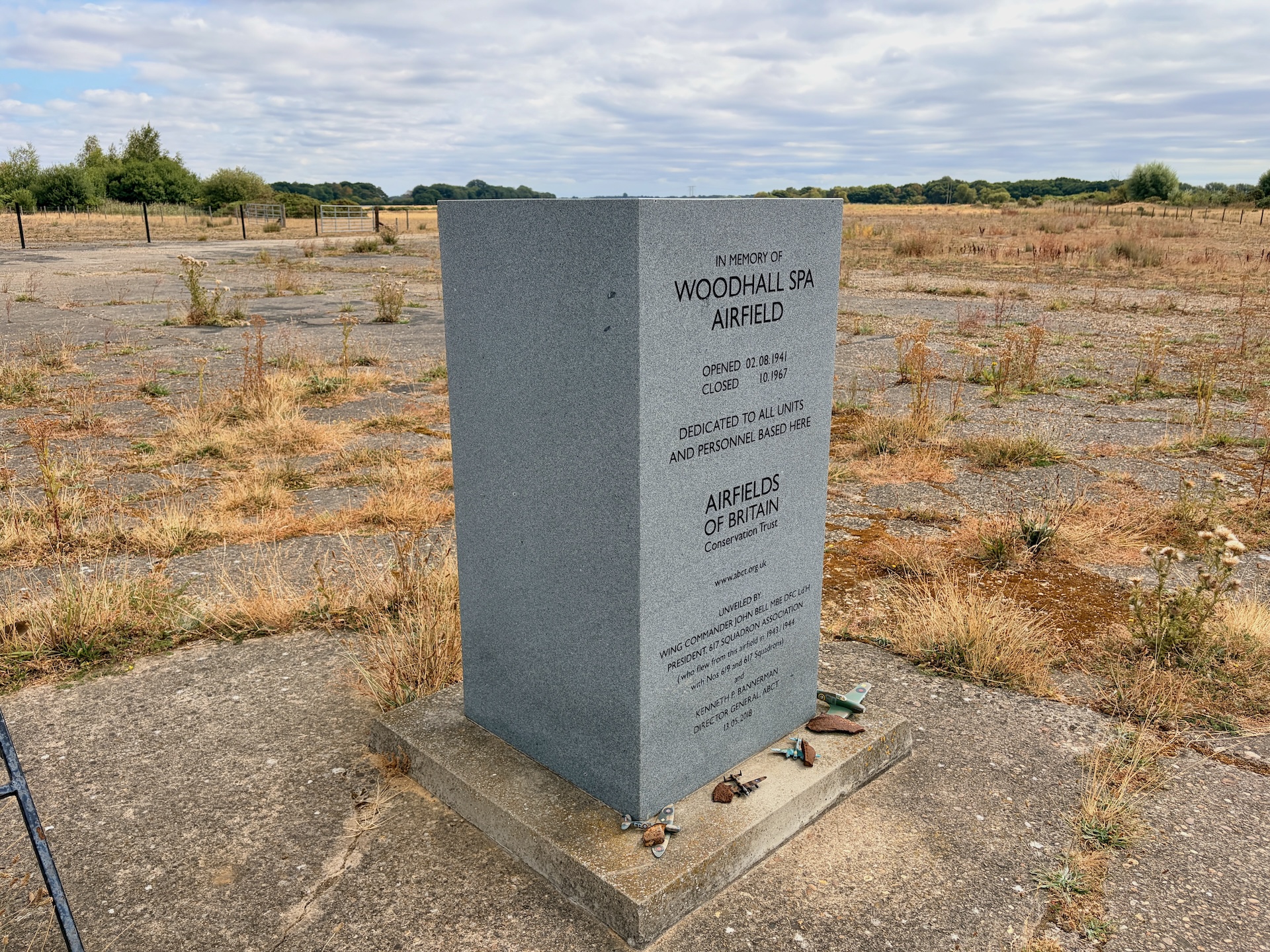
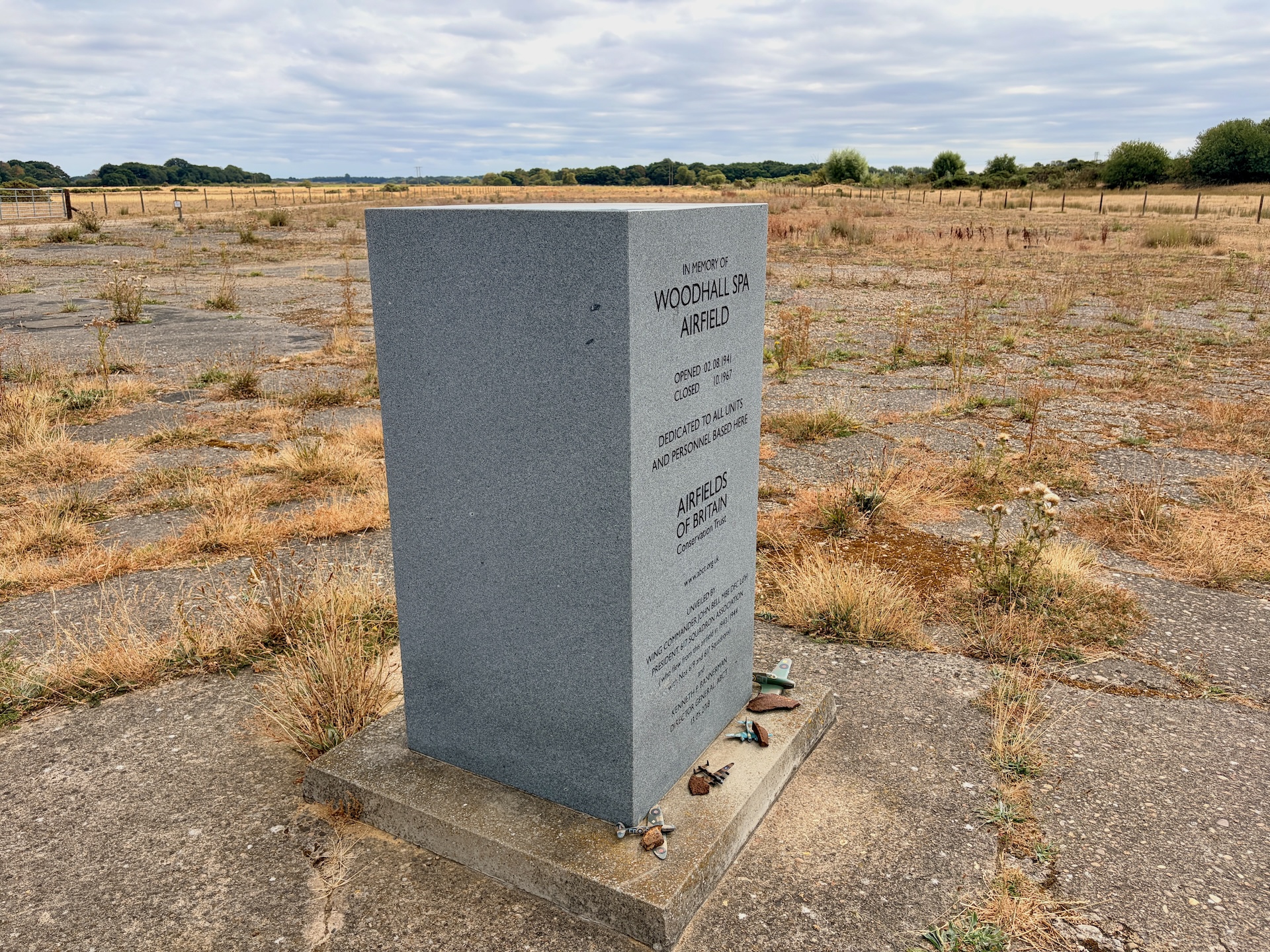
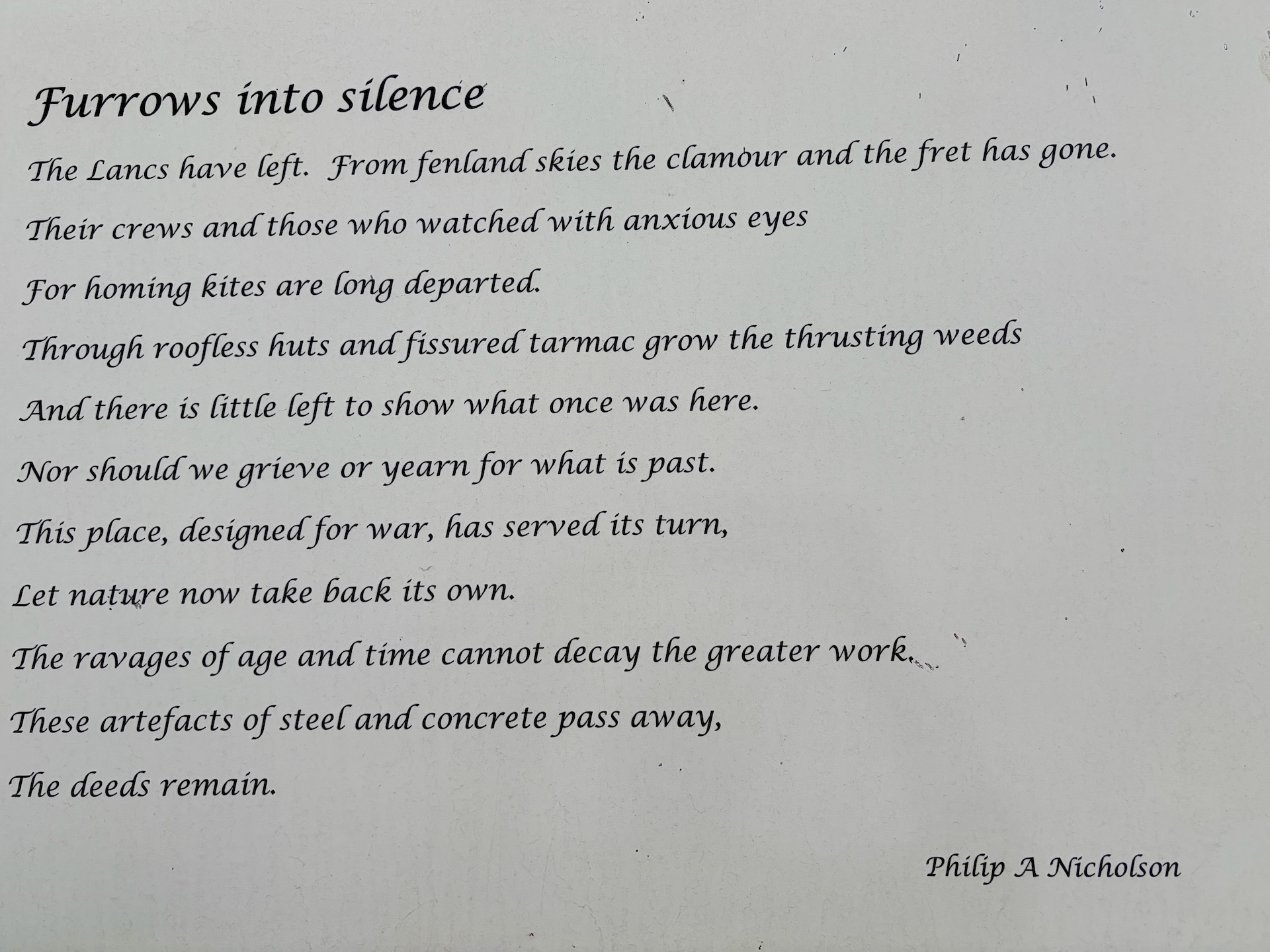
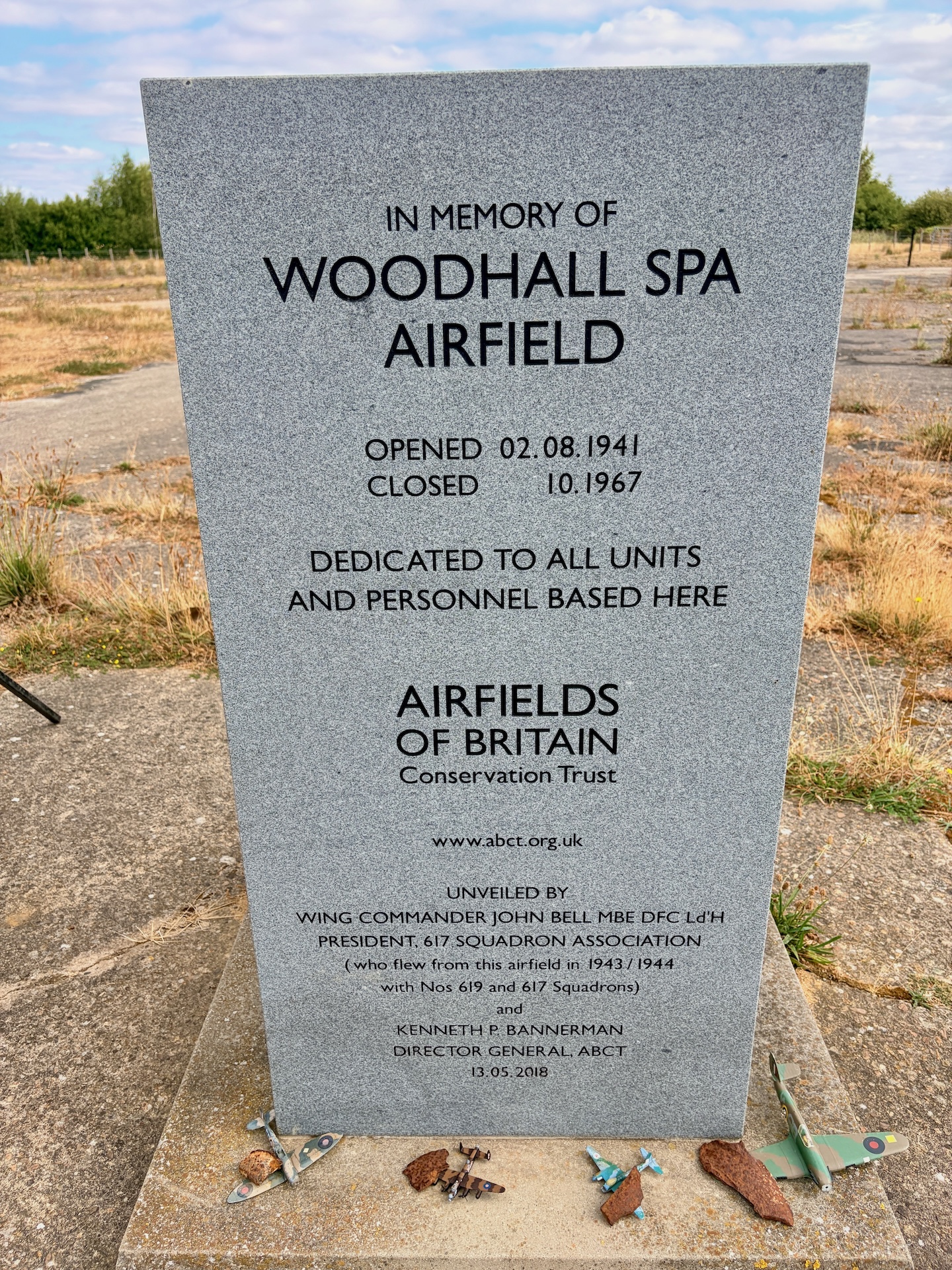
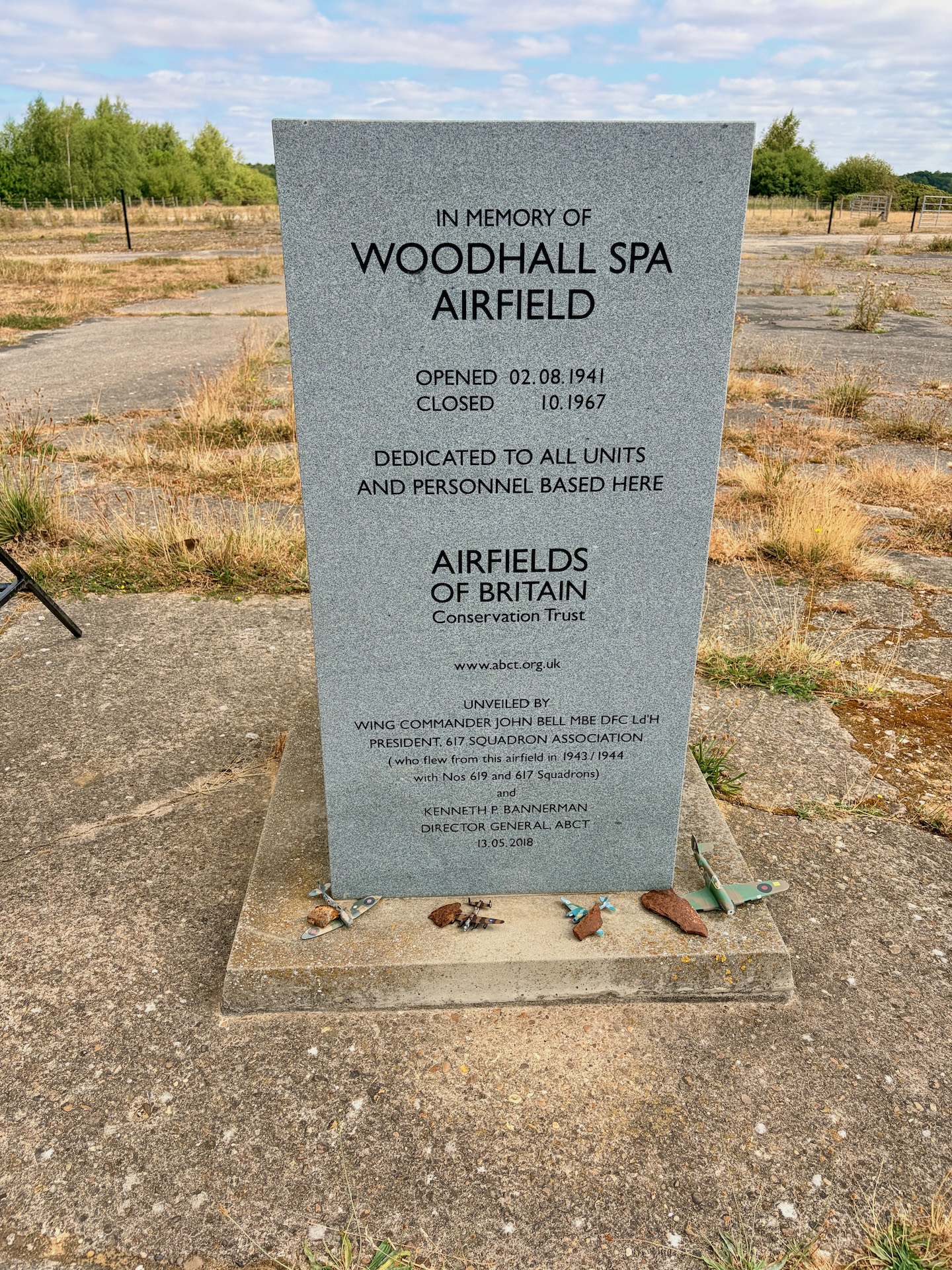
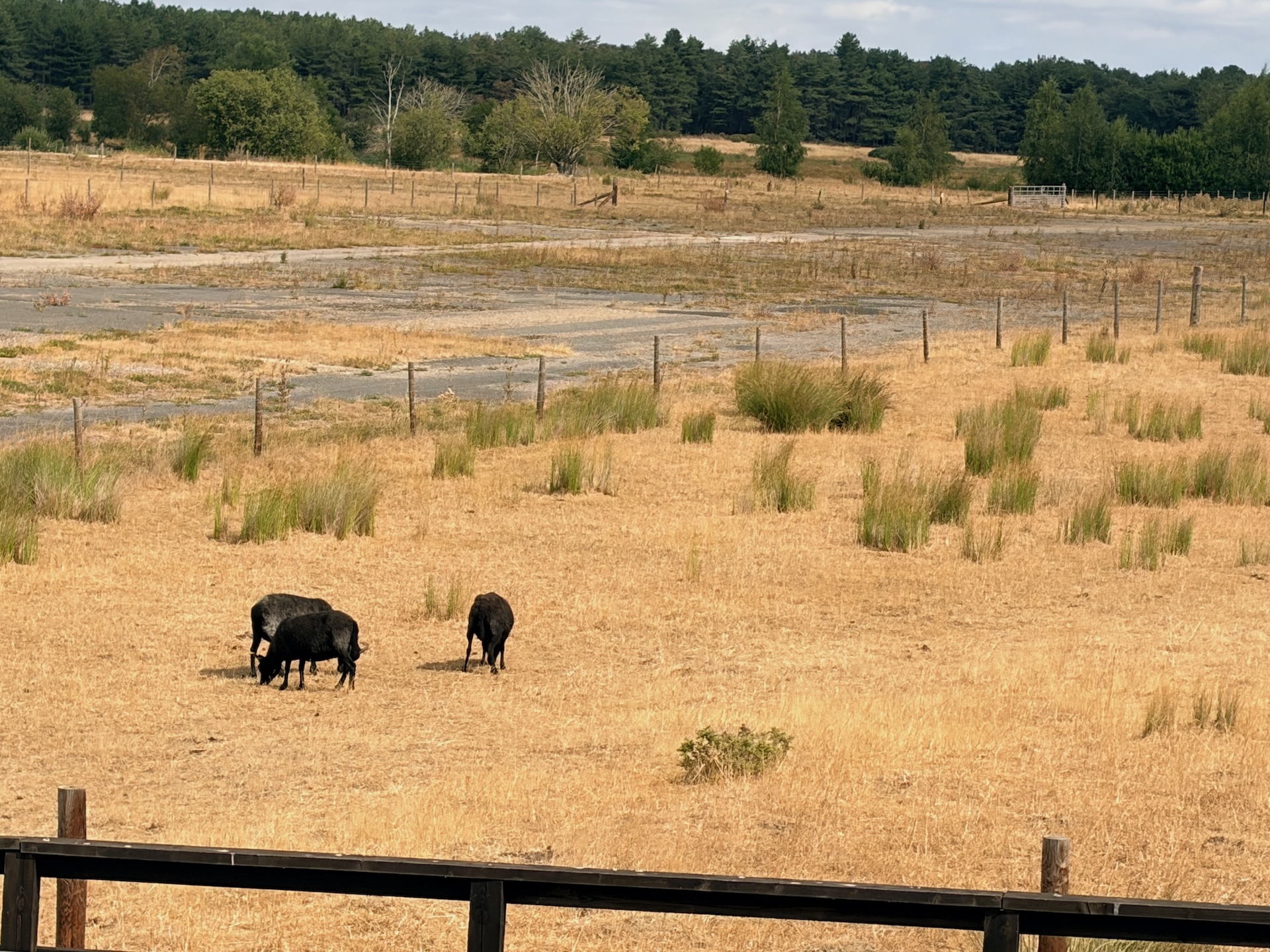
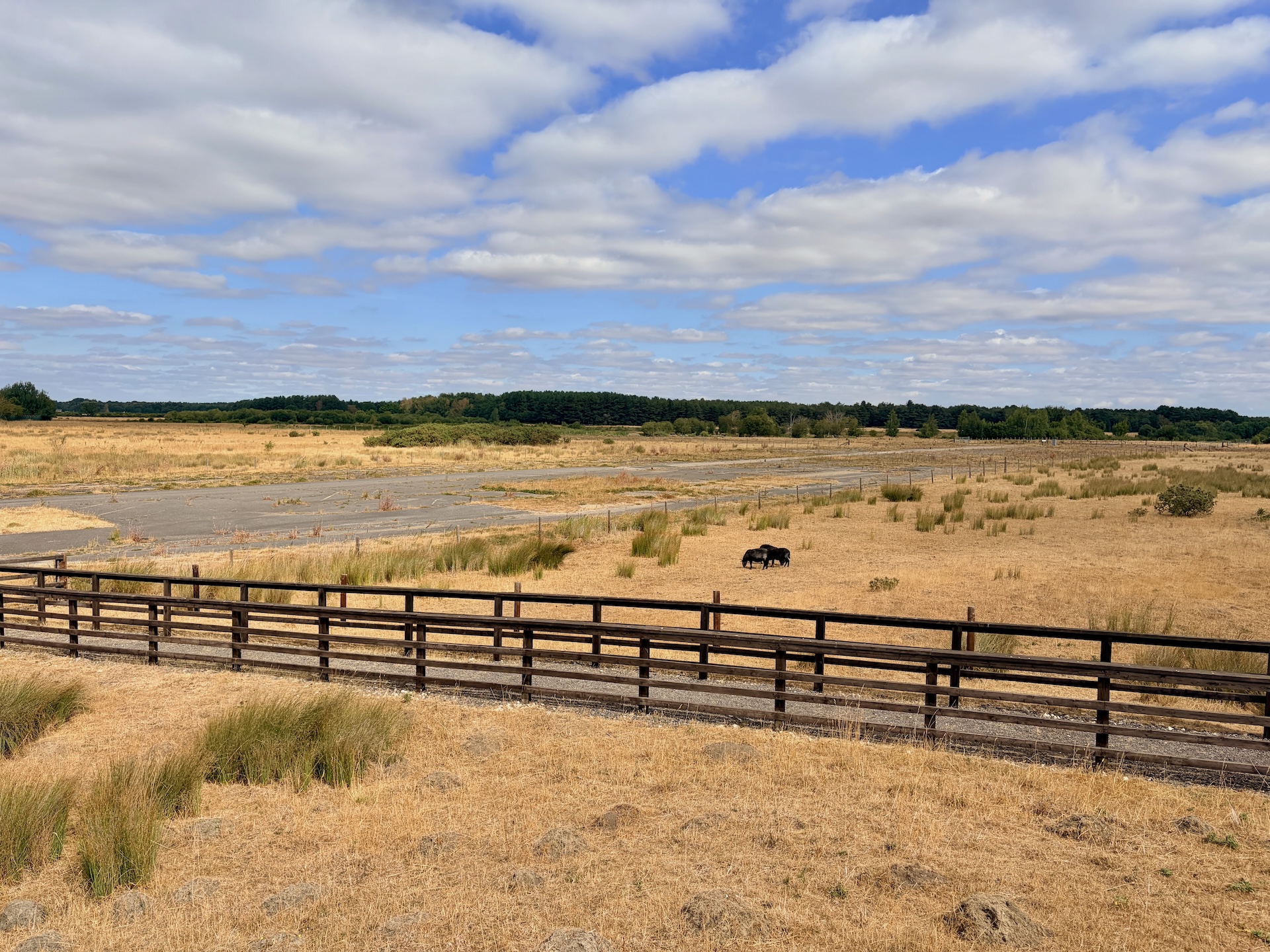
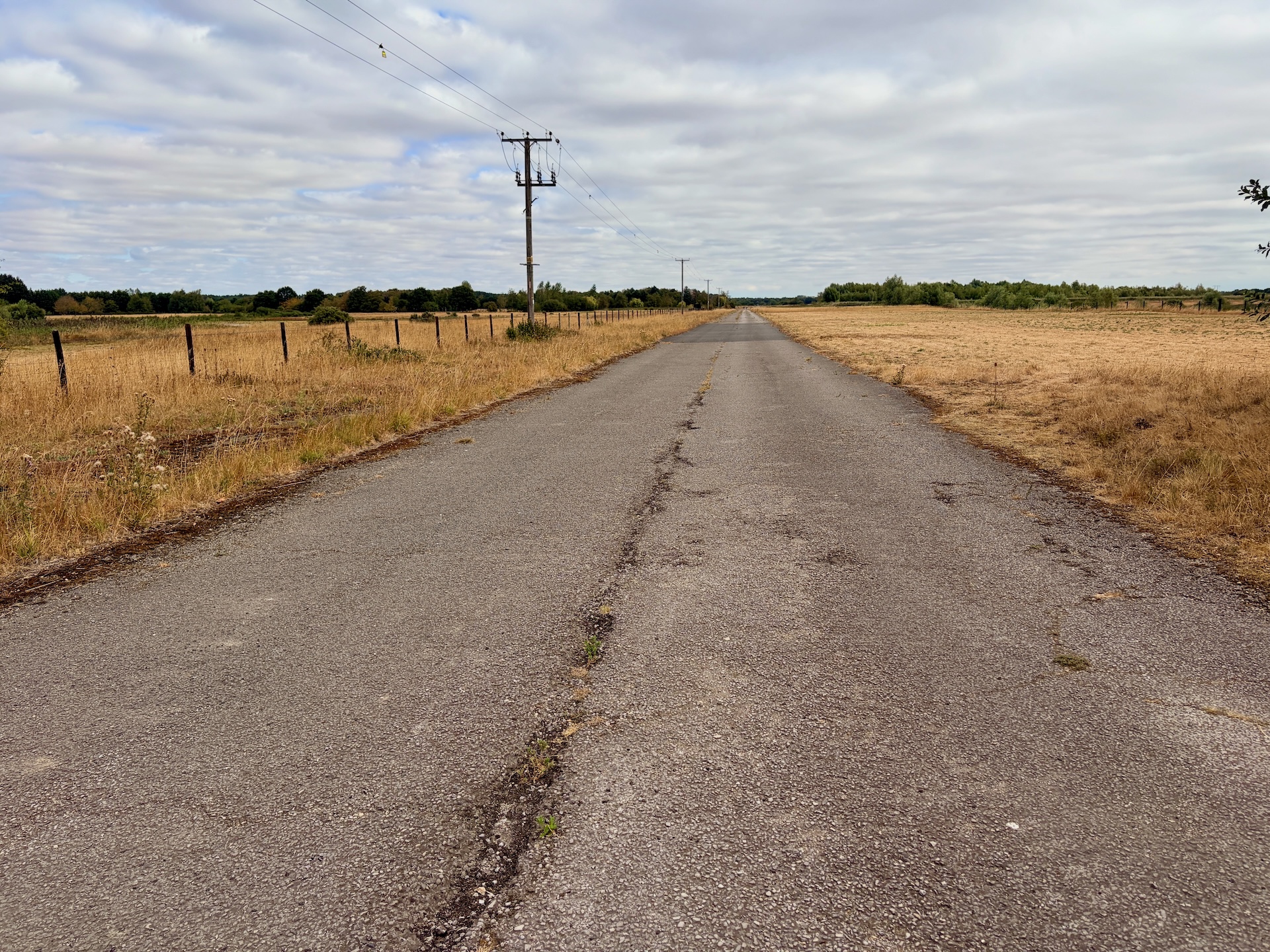
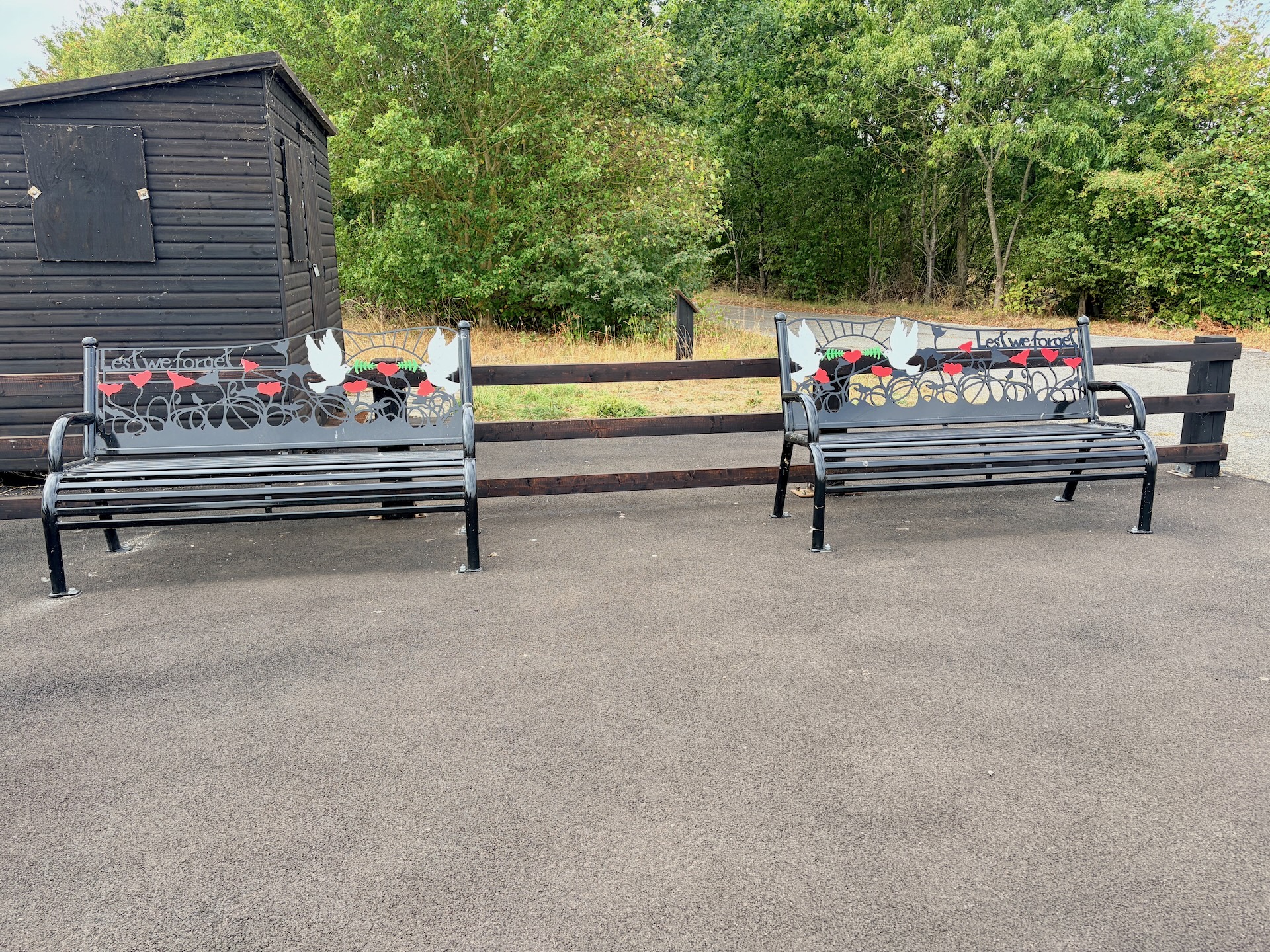
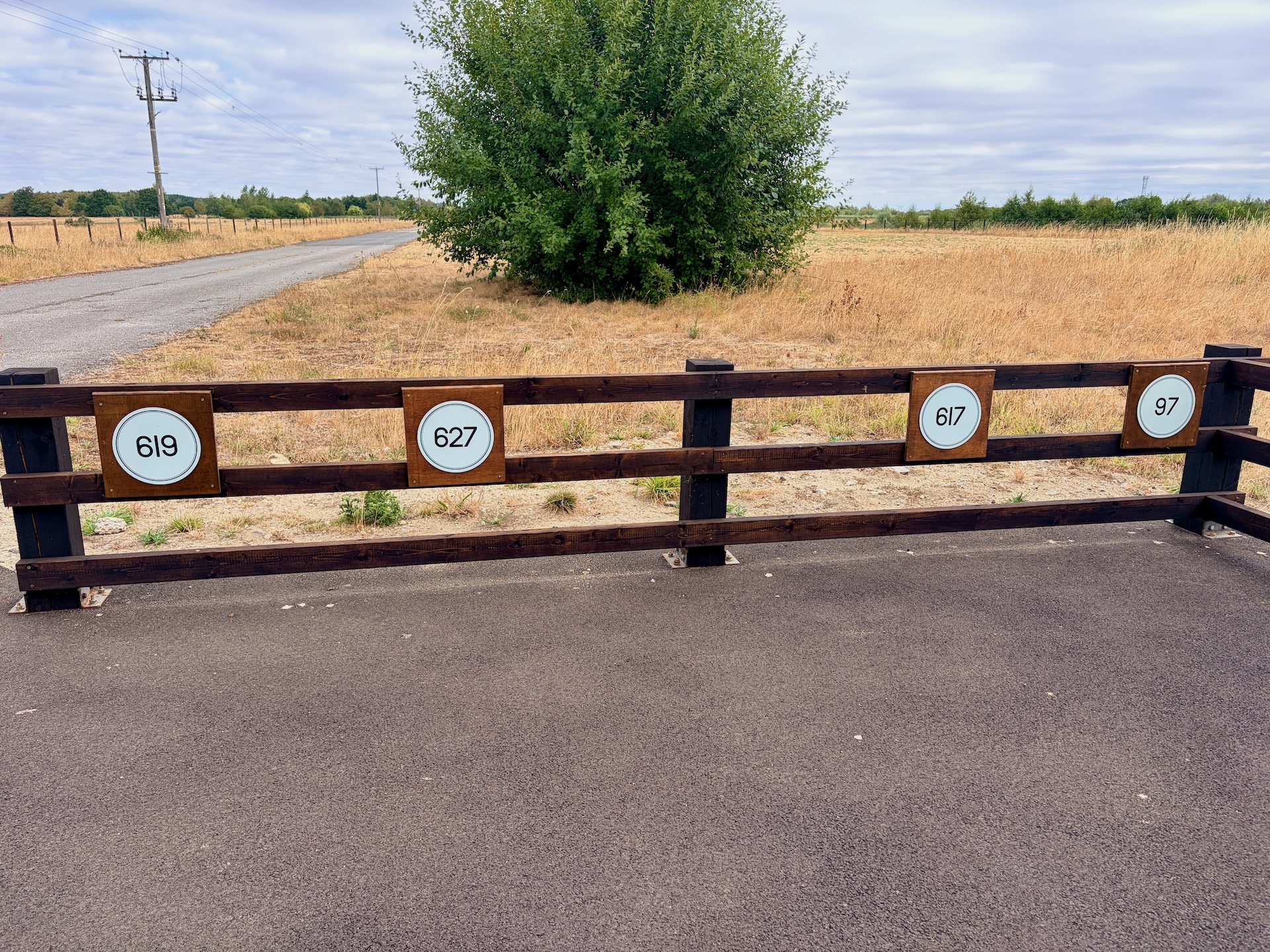
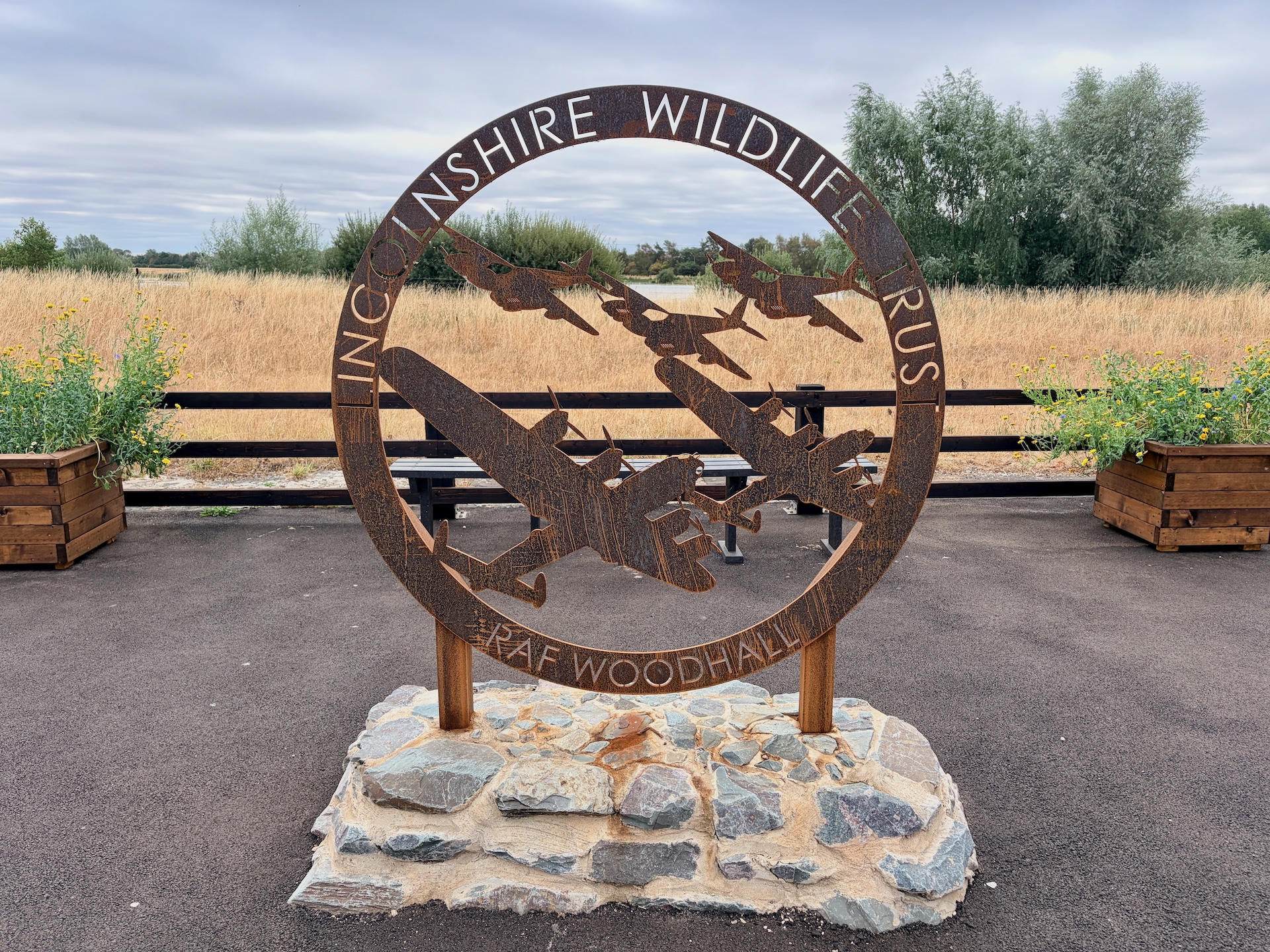
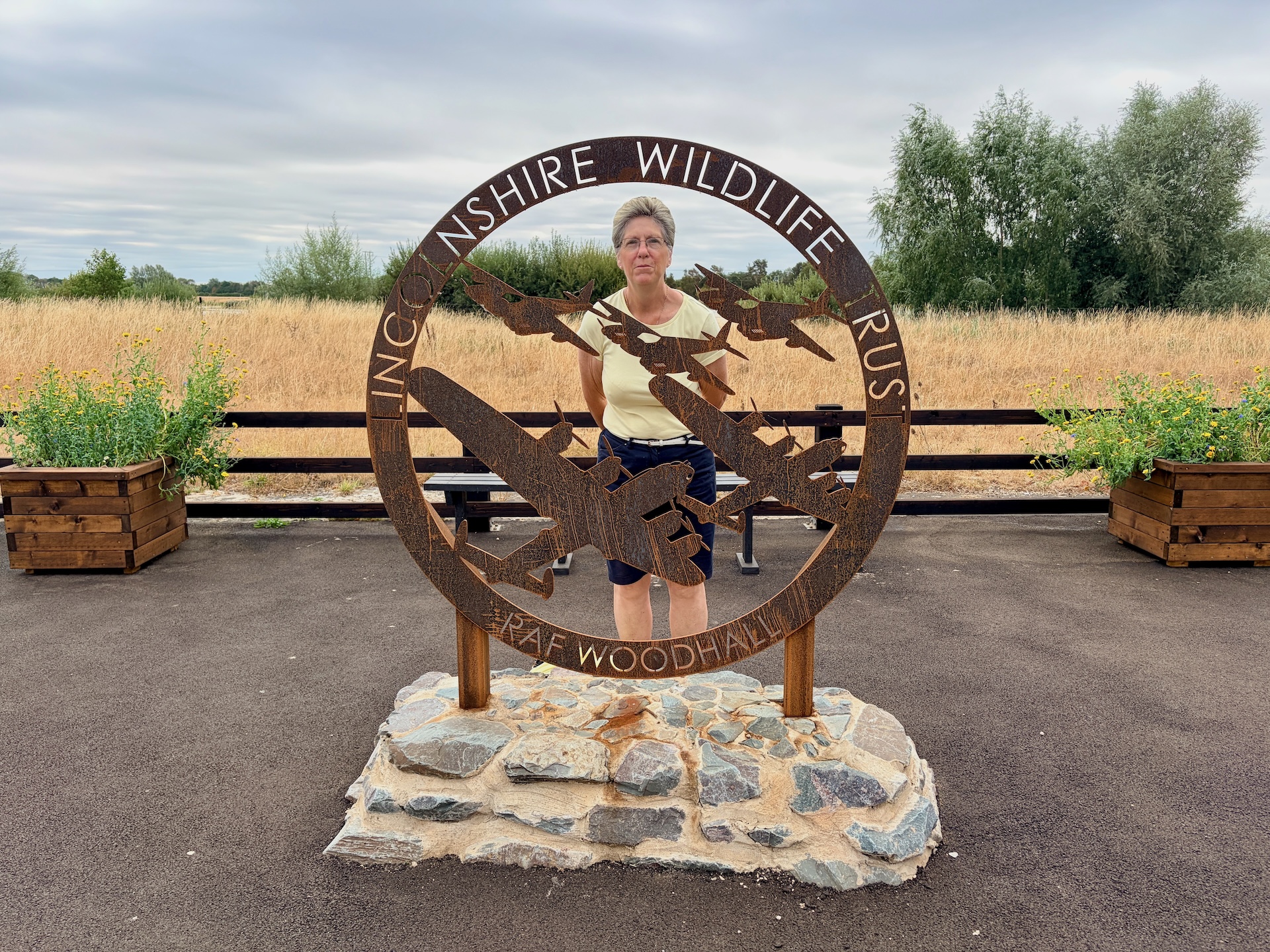
Over the weekend (14/15/16 August), we attended a very well organised 201 Sqn Association function at the Petwood Hotel. Two visits during Saturday daytime were organised, but as we had attended these sites before we explored RAF Woodhall instead, which is now a nature reserve. Below are some images of our visit. Link to Wiki and Woodhall Spa websites.
RAF Woodhall Spa was a key World War II bomber airfield in Lincolnshire, England, opening in February 1942. Famed as the base for No. 617 “Dambusters” Squadron and No. 627 Squadron, the site is now a peaceful nature reserve managed by the Lincolnshire Wildlife Trust and adjacent to the Thorpe Camp Visitor Centre.
History and Operations
- Opened in 1942 as a satellite station to RAF Coningsby in No. 5 Group Bomber Command.
- Home to heavy bomber squadrons including No. 97, No. 619, and the elite No. 617 “Dambusters” Squadron.
- Utilized by No. 627 Squadron to pioneer low-level target-marking techniques with Mosquito aircraft.
- Wing Commander Guy Gibson, who led the famous Dambusters raid, tragically lost his life on a flight departing from here in September 1944.
- Post-WWII, the site served as a storage location for maintenance units and later accommodated Bloodhound surface-to-air missiles during the Cold War until closing in the mid-1960s.
- Very little of the former airfield can be seen: the concrete runways were broken up and used elsewhere for hardcore prior to decades of sand and gravel extraction, which has only recently come to an end. Two key areas have survived; the former Bloodhound missile site in the north-west corner, which has been retained by RAF Coningsby as a storage site, and the intersection of the main and secondary runway upon which the quarrying plant was once located.
The Site Today
- Nature Reserve: The old runways and surrounding land form the Woodhall Spa Airfield Nature Reserve, offering scenic walks amidst local wildlife.
- Visitor Centre: Preserved domestic and communal brick buildings from the wartime era form the Thorpe Camp Visitor Centre, displaying uniform, equipment, and squadron memorabilia.
Airfield
RAF Woodhall Spa was built to a standard Class A airfield layout with three intersecting concrete runways oriented at 06-24 (2,075 yards / main runway), 12-30 (1,415 yards), and 18-36 (1,410 yards). A concrete perimeter track linked both ends of all three runways. Linked to the inside and outside of the perimeter track, but scattered randomly around the airfield were thirty-four aircraft hard-standings of 125ft diameter, which enabled the aircraft to be parked well away from each other and thus reduce the risk from air attack. However, there was a period in 1944 when 617 Sqn had 44 Lancasters on strength and 627 Sqn around 18 Mosquitos on strength.
The logistics involved in construction of a typical class A airfield are fascinating; each would consume in the region of 130,000 tons of ballast and cement.
Notes: The entrance to the site is via runway 06. You walk along runway 06 until you meet the intersection point of 12/30 where the memorial is located.